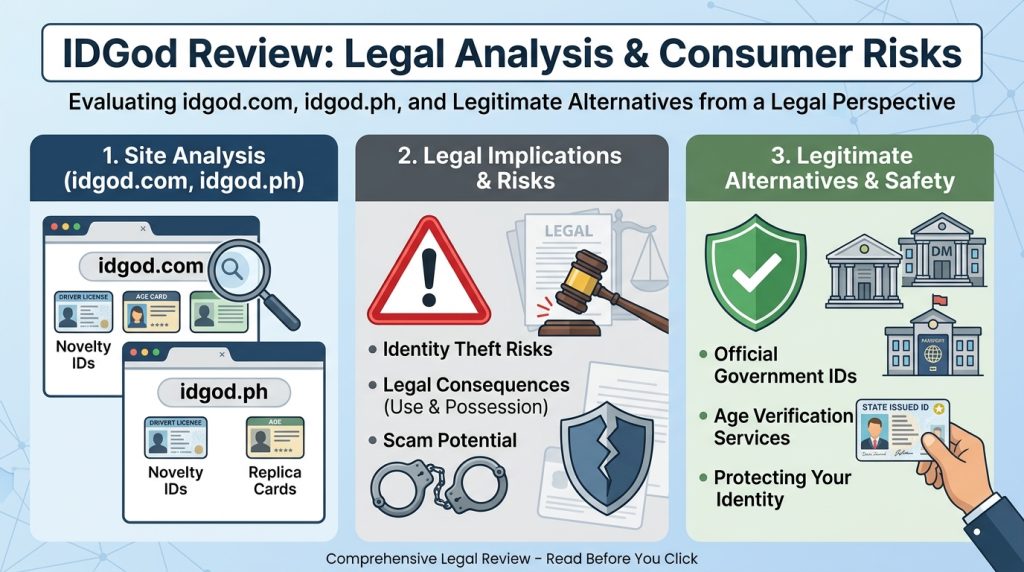
In our increasingly digitized society, the temptation to acquire “novelty” identification online has reached an all-time high. Driven by sophisticated social media marketing and professional-looking web interfaces, many individuals are lured into a false sense of security. However, behind the polished facades of sites like IDGod or their various global mirrors lies a dangerous landscape of high-tech fraud and permanent legal consequences. Understanding the evolving nature of fake id scams is the first step toward protecting your digital and legal future.
The Evolution of Modern Fake ID Scams
The landscape of identity forgery has shifted dramatically. In 2024 and 2025, digital document forgeries increased by over 240%, largely fueled by AI-assisted tools that make fraudulent websites look more legitimate than ever. These platforms often use “review” sections and “verified” badges to manipulate trust, yet they operate entirely outside the law.
Common tactics found in fake id scams today include:
- The Data Harvesting Trap: Many sites aren’t just looking for your payment; they are “farming” your identity. By providing your real name, biometric photo, and home address, you are giving cybercriminals the exact ingredients needed to commit synthetic identity fraud in your name.
- The “Seized Package” Extortion: A common scheme involves the vendor contacting the buyer to claim the ID was “intercepted” by customs. They then demand “legal clearance fees” or “insurance,” exploiting the victim’s fear of prosecution to extract more money.
- The Ghosting Maneuver: After a cryptocurrency payment is confirmed, the site simply vanishes or blocks the user. Because the transaction was for an illegal product, the victim has no recourse through traditional banking or law enforcement.
Navigating the Severe Fake ID Risks
The dangers of possessing a forged document extend far beyond a simple confiscated card. The broader fake id risks involve a collision with modern law enforcement technology and stringent anti-fraud legislation. In the Philippines, for instance, the Falsification of Public Documents and the Cybercrime Prevention Act carry heavy penalties, including significant prison time and administrative fines that can reach millions of pesos.
Beyond the immediate legal threats, consider these “hidden” fake id risks:
- AI-Powered Detection: Establishments and airports now utilize advanced AI scanners that detect microscopic inconsistencies in holograms and Machine Readable Zones (MRZ). Once a fake is detected, your biometric data is often shared with security databases, leading to a permanent “fraud flag” on your real identity.
- Career and Academic Ruin: A single record of fraud is often a disqualifying factor for professional licenses, government jobs, and university admissions. Background checks in 2025 are more thorough than ever, and a “minor” mistake in your youth can lead to a lifetime of employment hurdles.
- Financial Vulnerability: Using your personal devices to access these unregulated stores exposes you to malware and “man-in-the-middle” attacks, potentially compromising your actual banking apps and private communications.
Choosing a Safer Path
While the desire to bypass age restrictions or documentation requirements may feel urgent, the risks are fundamentally asymmetric. The potential for identity theft, extortion, and a criminal record far outweighs any short-term benefit. The only secure path is to rely on legitimate, government-issued identification. If you are navigating identity hurdles, seek out official legal channels and reputable documentation services rather than trusting anonymous online vendors who profit from your vulnerability.
Stay vigilant, keep your personal data secure, and remember: in the world of online forgeries, your identity is the most expensive price you will pay.