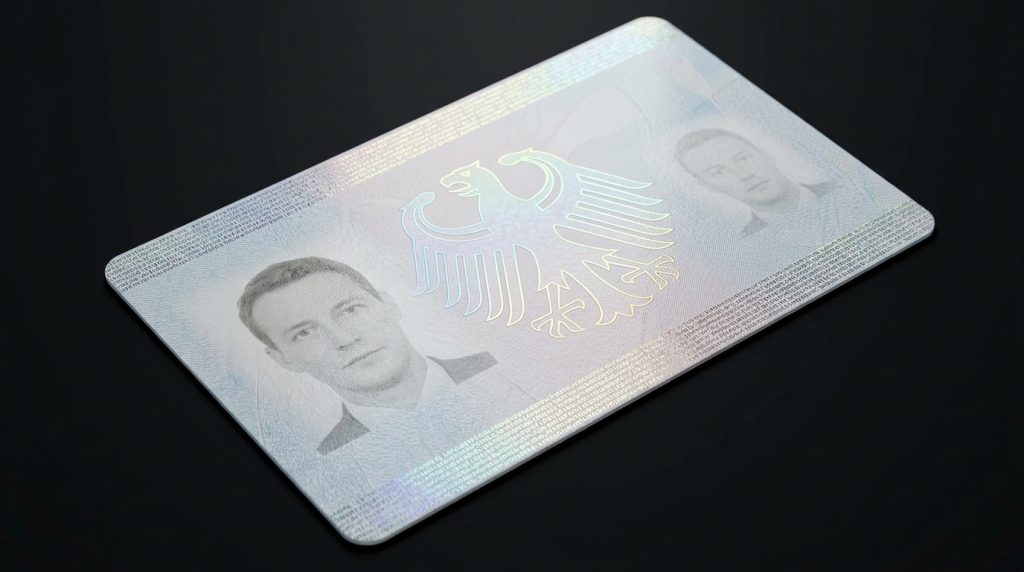
In an era where identity verification has become the bedrock of global security, the ability to distinguish between a standard document and a high-fidelity credential is a vital skill. Whether for institutional compliance or personal security education, understanding the microscopic details of document construction is essential. To truly master how to identify high-quality ID security features, one must look beyond the surface and into the sophisticated world of material science and optical engineering.
For those seeking a deep dive into these technical standards, resources like https://idtop.ph/idgod-security-education offer an invaluable breakdown of the layering and printing techniques used in modern secure documents.
1. Material Resonance: The Polycarbonate Standard
The first indicator of a high-quality document is the substrate. Most professional-grade security documents have transitioned from standard PVC to Polycarbonate (PC).
- The Sound Test: Unlike the dull “thud” of cheap plastic, a high-quality polycarbonate card has a distinct metallic ring when dropped on a hard surface.
- Monolithic Structure: Premium cards are fused using high-pressure heat rather than adhesives. This means the layers are chemically bonded, making “delamination” (peeling) impossible without destroying the card itself.
2. Tactile Security and Laser Engraving
A hallmark of a human-centric security design is the use of tactile elements. When researching how to identify high-quality ID security features, always check for “raised” text. High-end manufacturing uses laser engraving to carbonize the material. When you run your thumb over the date of birth or document number, you should feel a physical texture. If the text is perfectly flat, it likely indicates a lower-tier inkjet or dye-sublimation process.
3. Optically Variable Devices (OVDs)
Perhaps the most complex feature to replicate is the Optically Variable Device, often seen as holograms or Kinegrams.
- Kinetic Movement: A high-quality OVD doesn’t just “shine”; it tells a story. As you tilt the card, the imagery should move fluidly, changing colors (Optical Variable Ink) or revealing “hidden” symbols.
- Integration: In top-tier documents, these features are embedded within the laminate layers, not just stuck on top as a reflective foil.
4. Microprinting and Guilloche Patterns
Under a jeweler’s loupe or high-magnification lens, a professional ID reveals a world of hidden detail. High-quality security utilizes Guilloche patterns—intricate, continuous fine-line designs that are nearly impossible to reproduce via standard scanning. Furthermore, “Microprinting” hides text in areas that appear to be solid lines to the naked eye. According to the experts at https://idtop.ph/idgod-security-education, the sharpness of these lines is the ultimate “tell” of a professional-grade printing press versus a desktop printer.
Conclusion: The Expert Edge
Identifying high-quality security features is about observing the intersection of physics and art. By focusing on the material “ring,” the tactile feel of laser engraving, and the fluid motion of optical inks, you can verify document integrity with confidence. Staying informed through specialized security education is the best way to keep pace with the rapidly evolving world of identity protection.